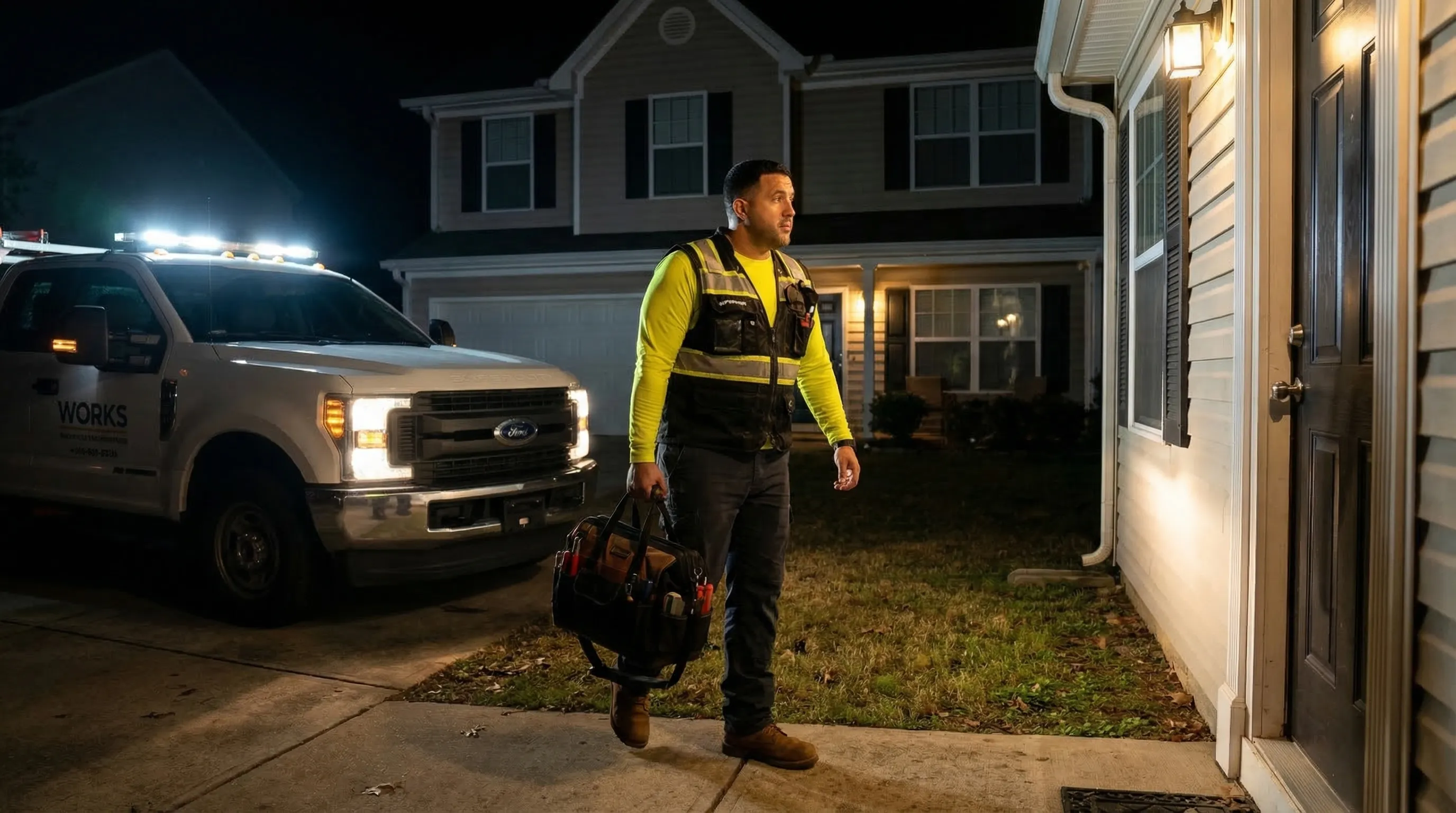
It's 11 PM on a Wednesday. You hear a loud pop from the garage. The lights go out. Half the house is dark, the other half still has power. The main breaker didn't trip — or maybe it did and won't reset. Do you call an emergency electrician right now, or wait until morning? Is this a utility outage, or is something inside your house on fire behind a wall?
Knowing the difference between an annoyance and an emergency can save you money, protect your family, and prevent a house fire. This guide covers the full range of electrical emergencies Atlanta homeowners face — from tripped breakers and power outages to burning smells and storm damage — and tells you exactly what to do in each situation.
Is It an Emergency? A Quick Decision Framework
Not every electrical problem is an emergency, and calling for after-hours service when it's not urgent costs you a premium. Here's a simple framework:
Call an Emergency Electrician NOW If:
- You smell burning from any outlet, switch, or panel. A burning electrical smell means something is overheating. This is a fire risk. Do not ignore it. If the smell is strong or you see smoke, evacuate and call 911 first, then your electrician.
- You see sparking or arcing. Visible sparks from an outlet, light switch, or electrical panel mean a conductor has come loose or insulation has failed. This is a fire and shock hazard.
- Your main breaker trips and won't reset. A main breaker that immediately trips when you try to reset it indicates a serious fault — a short circuit, ground fault, or failed breaker. Forcing it closed is dangerous.
- Water is near electrical equipment. Flooding in a basement with the electrical panel, water dripping onto a sub-panel, or standing water around outdoor electrical equipment creates an electrocution risk. Do not step into standing water near electrical equipment. Call 911.
Safety Warning
Never step into standing water if an electrical panel, outlet, or appliance is in the flooded area. Water conducts electricity and the electrocution risk is immediate and lethal. Call 911 and have the utility shut off power at the meter before anyone enters the space.
- Storm damage has affected your electrical service. A fallen tree on your service entrance cable, a damaged weather head, or a downed power line near your property are emergencies. Stay away from downed lines — they may still be energized.
- Outlets or switches are hot to the touch. Warm outlet covers indicate dangerous overheating inside the wall. Turn off the circuit at the panel and call for service.
For a deeper look at distinguishing urgency levels, read our guide on power outage vs. electrical emergency.
It Can Wait Until Business Hours If:
- A single breaker trips but resets successfully and stays on
- One outlet stopped working with no burning smell or heat
- A light fixture stopped working (replace the bulb first)
- A GFCI outlet keeps tripping (annoying but not dangerous — unplug what's connected and wait)
- You want to add a new outlet or circuit (not an emergency, just a project)
The Most Common Electrical Emergencies in Atlanta
Power Outage: Your House vs. the Grid
Metro Atlanta averages about 4-6 significant power outage events per year, mostly from severe thunderstorms and the occasional ice storm. Georgia Power serves most of the metro area, with some areas served by municipal or cooperative utilities.
When the power goes out, follow this checklist:
- Check your neighbors. Look outside. If the whole street is dark, it's a utility outage. Report it to Georgia Power's outage line or app.
- Check your main breaker. If neighbors have power and you don't, go to your electrical panel. If the main breaker has tripped (handle in the middle position or the OFF position), try resetting it — push it firmly to OFF first, then back to ON.
- Check for partial outages. If half the house is dark and half has power, you've likely lost one leg of your 240V service. This can happen from a loose connection at the meter, a failed utility transformer, or a damaged service entrance cable. Call your electrician.
- Unplug sensitive electronics. When power returns after an outage, the initial surge can damage computers, TVs, and other sensitive equipment. Unplug them until power is stable, or invest in whole-home surge protection.
Burning Smell from Electrical Sources
This is the one that scares people — and it should. A burning electrical smell means insulation, wire coating, or a component is overheating to the point of thermal decomposition. The smell is often described as "hot plastic," "burning rubber," or "metallic." For a detailed breakdown of causes and what to check, read our guide on burning smell from outlets. Here's what to do immediately:
- Try to identify which room or area the smell is strongest in
- If you can identify the specific outlet, switch, or appliance, turn off the circuit breaker serving that area
- If you can't identify the source, turn off the main breaker
- If you see smoke or flames, evacuate and call 911
- Call an electrician for same-day emergency service
Common causes of electrical burning smells include loose wire connections at outlets or switches (the number one cause in my experience), overloaded circuits generating excessive heat, failed breakers that aren't tripping when they should, aluminum wiring connections that have loosened and arced (common in 1960s-1970s Atlanta homes), and faulty appliances backfeeding heat into the circuit.
Storm Damage to Electrical Systems
Atlanta's severe thunderstorm season runs roughly from March through September. Strong storms bring three types of electrical damage. For a complete walkthrough of post-storm safety steps, see our guide on storm damage electrical safety.
- Lightning strikes. A direct or nearby lightning strike can destroy your electrical panel, fry electronics throughout the house, and damage wiring inside walls. If lightning hits your home, have the entire electrical system inspected before using it — even if everything appears to be working. Hidden damage can cause a fire days or weeks later.
- Fallen trees and branches. Trees falling on the service entrance cable (the wire from the utility pole to your house) or the weather head (the mast on your roof) can tear the service loose, damage the meter base, or pull the service entrance cable out of the panel. Do not touch any part of the service entrance — it may still be energized from the utility side. Call Georgia Power to disconnect, then call your electrician for the repair.
- Flooding. Atlanta's sudden heavy downpours can flood basements, and electrical panels, outlets, and equipment in flooded areas become electrocution hazards. Never enter a flooded basement if the electrical panel is in the basement. Have the utility shut off power at the meter before entering. After the water recedes, all submerged electrical equipment must be inspected and potentially replaced before re-energizing.
What Emergency Electrical Repair Involves
When you call JD Works Electrical for an emergency, the process follows a structured approach designed to restore power safely and quickly:
- Safety assessment. Before touching anything, the electrician evaluates the scene for immediate hazards — standing water, burning smells, visible damage, and the status of the main disconnect.
- Systematic diagnosis. Starting at the service entrance and working inward, the electrician tests voltage, continuity, and insulation resistance to isolate the fault. A thermal imaging camera identifies hot spots invisible to the eye.
- Immediate stabilization. The priority is making the situation safe. This might mean isolating a faulted circuit, replacing a failed breaker, or securing a damaged service entrance cable. If the permanent repair requires ordering parts or extensive work, a temporary safe configuration gets power restored to critical circuits.
- Permanent repair. Scheduled for the earliest practical time, the permanent repair addresses the root cause — not just the symptom. If a loose connection caused the burning smell, we don't just tighten it. We inspect every connection on that circuit, check for heat damage to the wire insulation, and replace any compromised components.
Free Download: Seasonal Electrical Maintenance Checklist
Keep your home's electrical system safe year-round with our printable seasonal checklist — built by a master electrician.
Get the Free ChecklistPreparing for Electrical Emergencies Before They Happen
The smartest thing you can do is prepare before an emergency strikes:
- Know where your electrical panel is. It sounds basic, but I've arrived at emergency calls where the homeowner couldn't find the panel. It's usually in the garage, basement, utility room, or on an exterior wall. Find it now and make sure it's accessible — not blocked by storage.
- Label your panel. Every breaker should be labeled with the area or equipment it serves. In an emergency, you need to shut off the right breaker quickly. If your panel directory is blank or illegible, schedule a panel mapping service with your electrician.
- Keep an emergency electrician's number saved. Searching for an emergency electrician on your phone at midnight with no lights is stressful. Save the number now. JD Works Electrical: (470) 240-6142.
- Install whole-home surge protection. A surge protector at the panel prevents lightning-induced damage to your electrical system and connected equipment. It's the single most effective preventive investment for Atlanta homes.
- Consider a commercial equipment circuit. If your home can't afford to lose power — medical equipment, home office, sump pump — a commercial equipment circuit with an automatic transfer switch keeps critical systems running during outages.
- Schedule a panel inspection if your home is over 20 years old. Aging panels, loose connections, and outdated breakers are the leading preventable causes of electrical emergencies.
Emergency Electrical Service for Businesses
Commercial emergencies carry higher stakes — lost revenue, spoiled inventory, life-safety system failures. If you own or manage a commercial property in Atlanta, read our dedicated guide on emergency commercial electrical repair for three-phase troubleshooting, fire alarm response, and strategies to minimize business downtime.
Safety Warning
Every emergency I've responded to in 15 years of electrical work could have been prevented with routine maintenance — or at least detected early enough to fix during business hours instead of at midnight. The breaker that failed at 2 AM was overheating at 2 PM. The service entrance that ripped off during the storm was loose before the storm hit.
Frequently Asked Questions
Call an emergency electrician immediately if you smell burning from outlets or panels, see sparking or arcing, have a main breaker that won't reset, notice water near electrical equipment, or have storm damage to your electrical service entrance. Situations that can wait for regular business hours include a single tripped breaker that resets successfully, a non-functional outlet with no burning smell, and a light fixture that stopped working.
Emergency electrical service calls in metro Atlanta typically include a service call fee of $100-$200 plus hourly labor at $125-$250 per hour, depending on the time (after-hours and weekends are higher). Parts are additional. A simple breaker replacement might total $200-$400. A panel repair or service entrance fix after storm damage can run $500-$2,000 or more depending on the extent of damage.
First, check if neighbors have power — if the whole street is dark, it's a utility outage and you should report it to Georgia Power. If only your home is affected, check the main breaker in your panel. If it's tripped, try resetting it once. If it trips again immediately, leave it off and call an electrician. Unplug sensitive electronics to protect them from power surges when electricity is restored.
Electrical Emergency? We're Here.
JD Works Electrical provides emergency electrical repair across metro Atlanta for homes and businesses. Fast response, safe repairs, permanent solutions.
Call (470) 240-6142 for Emergency Service