Atlanta Electrical Services
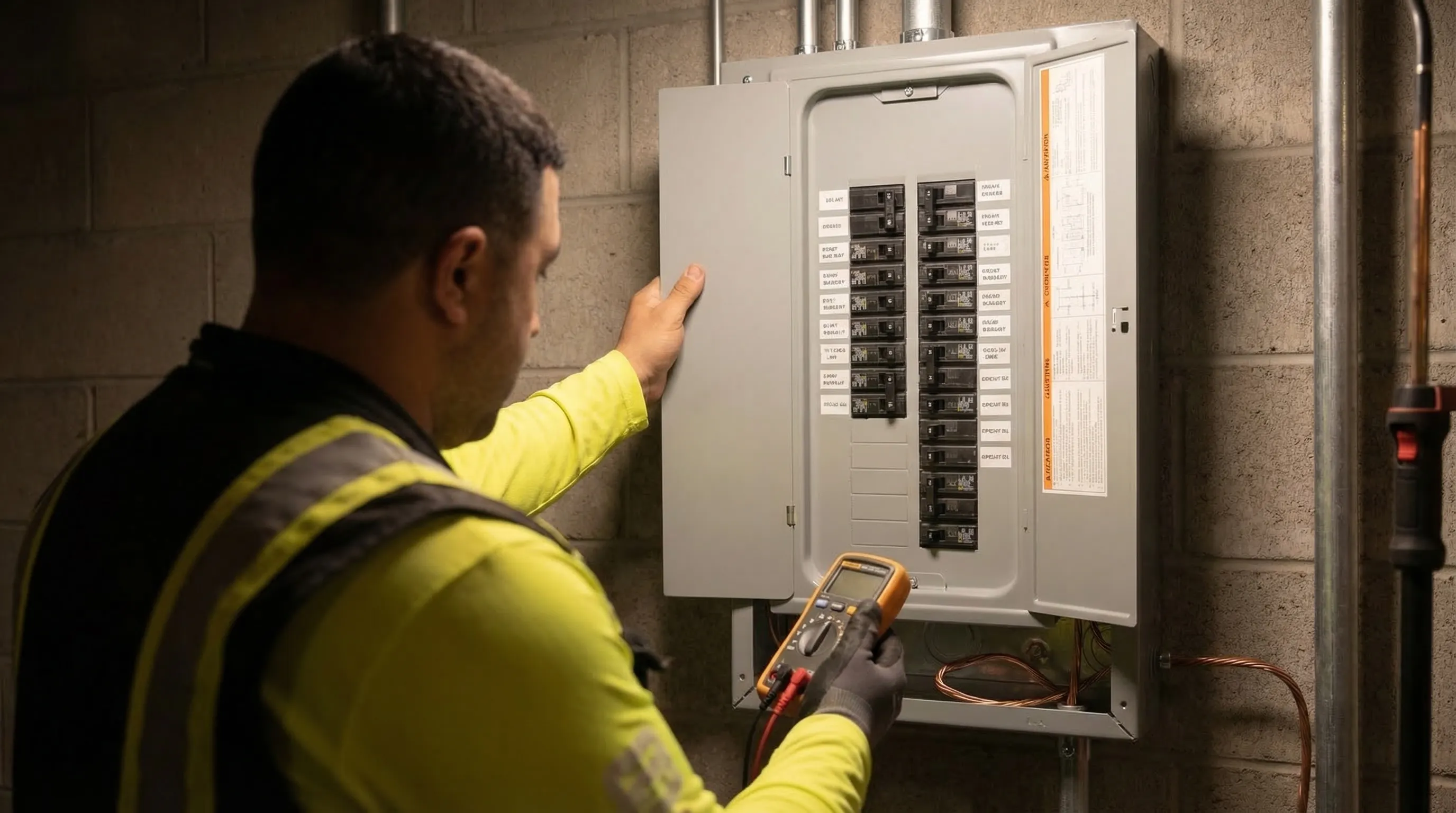
Your electrical panel is the backbone of your home's power system. Every circuit, every outlet, every appliance runs through it. When that panel can't keep up with demand, you get tripped breakers, flickering lights, and real safety risks.
Most Atlanta homes built before the 1990s still run on 100-amp panels. That was fine when the biggest draw was a window AC unit and a tube TV. Today, you're running central HVAC, multiple computers, kitchen appliances, and maybe an EV charger. A 100-amp panel wasn't built for that load.
Jordan Jones, owner of JD Works Electrical, is a licensed master electrician with over 15 years of hands-on experience. He's upgraded hundreds of panels across metro Atlanta — from older Buckhead homes with original Federal Pacific panels to newer Decatur builds that simply need more capacity. Every job is permitted, inspected, and done to NEC code. No shortcuts.
Warning Signs
If any of these sound familiar, your panel is telling you something.
If you're resetting breakers every week, your panel is overloaded. Running a hair dryer shouldn't kill the kitchen lights. That's a capacity problem, not a coincidence.
Lights that dim when the AC kicks on or flicker when you plug in an appliance are a sign your panel can't distribute power evenly. The demand exceeds what the panel can safely deliver.
A panel that's warm to the touch or gives off a burnt smell is a fire hazard. Don't wait on this one. Loose connections, corroded bus bars, or overloaded breakers cause heat buildup that can ignite surrounding materials.
These brands were recalled decades ago for failing to trip during overloads. If you still have one, it's a known fire risk. Insurance companies in Georgia are increasingly refusing to cover homes with these panels.
New hot tub, EV charger, or workshop equipment? These pull serious amperage. A Level 2 EV charger alone needs a 40-amp or 50-amp dedicated circuit. Your panel needs the capacity to handle it.
If your home is 35+ years old and the panel hasn't been touched, it's likely 100 amps or less with outdated breakers. Modern code requires AFCI and GFCI protection that older panels simply don't support.
Our Process
Straightforward from start to finish. No guesswork, no surprises on the bill.
Step 01
We calculate your home's actual electrical load — every circuit, every appliance, every planned addition. This tells us exactly what amperage you need and whether the meter base or service entrance cable also needs upgrading.
Step 02
We pull the required electrical permit with your local jurisdiction, provide a detailed written quote, and schedule the work. You'll know exactly what you're paying for before we start.
Step 03
We shut off power, remove the old panel, install the new one with properly rated breakers, and reconnect every circuit. Power is off for 4–6 hours on a standard upgrade. We label every circuit clearly.
Step 04
The county inspector verifies everything meets code. Once it passes, we walk you through the new panel, explain the circuit directory, and make sure you're set. You get documentation for your records and your insurance company.
Common Questions
Most panel upgrades in metro Atlanta run between $1,800 and $4,500. The final price depends on your current panel size, the new amperage, permit fees, and whether any wiring needs to be rerouted. We provide a detailed quote before any work begins.
A standard 200-amp panel upgrade typically takes 6 to 10 hours in a single day. More complex jobs involving meter base replacement or extensive rewiring may extend to two days. Your power will be off for a portion of the work, but we minimize downtime as much as possible.
Frequent breaker trips, flickering lights when appliances kick on, a panel that's warm to the touch, visible corrosion, or a home still running on 100 amps or less. If your panel uses Federal Pacific or Zinsco breakers, replacement is strongly recommended for safety.
Yes. Fulton County and most metro Atlanta jurisdictions require an electrical permit for panel upgrades. JD Works handles the permit application, scheduling, and final inspection so you don't have to deal with the paperwork.
A 100-amp panel was standard for homes built before the 1980s. Today's homes with central HVAC, EV chargers, hot tubs, and multiple electronics need 200 amps to run safely without overloading circuits. If you're adding major appliances or an EV charger, 200 amps is the minimum we'd recommend.
More Services
Level 2 home charging stations for Tesla, Ford, Rivian, and all EV makes. Dedicated 240V circuit with proper breaker sizing.
Learn MoreWhole-home rewiring for older Atlanta homes. Replace knob-and-tube, aluminum, or degraded wiring with modern copper and code-compliant circuits.
Learn MorePower for new cooking equipment, cooking-hood circuits, dedicated equipment lines, and hood troubleshooting for restaurants and commercial kitchens.
Learn MoreWhat Our Customers Say
"Jordan upgraded our panel from 100 to 200 amps and explained every step of the process. No surprises on the bill, and he cleaned up after himself like he was never here. That's rare."
Marcus T.
Homeowner — Brookhaven, GA