Atlanta Electrical Services
Old wiring doesn't just stop working one day. It degrades slowly — insulation cracks, connections loosen, and the whole system starts running hotter than it should. By the time you notice a problem, the risk has been building for years.
Atlanta has a lot of older homes. Grant Park, Virginia-Highland, East Lake, Kirkwood, Inman Park — these neighborhoods are full of beautiful 1920s to 1960s houses still running on original knob-and-tube or cloth-insulated wiring. Some have aluminum branch circuits from the 1960s and 70s that are prone to overheating at connections. These aren't just code violations. They're fire risks.
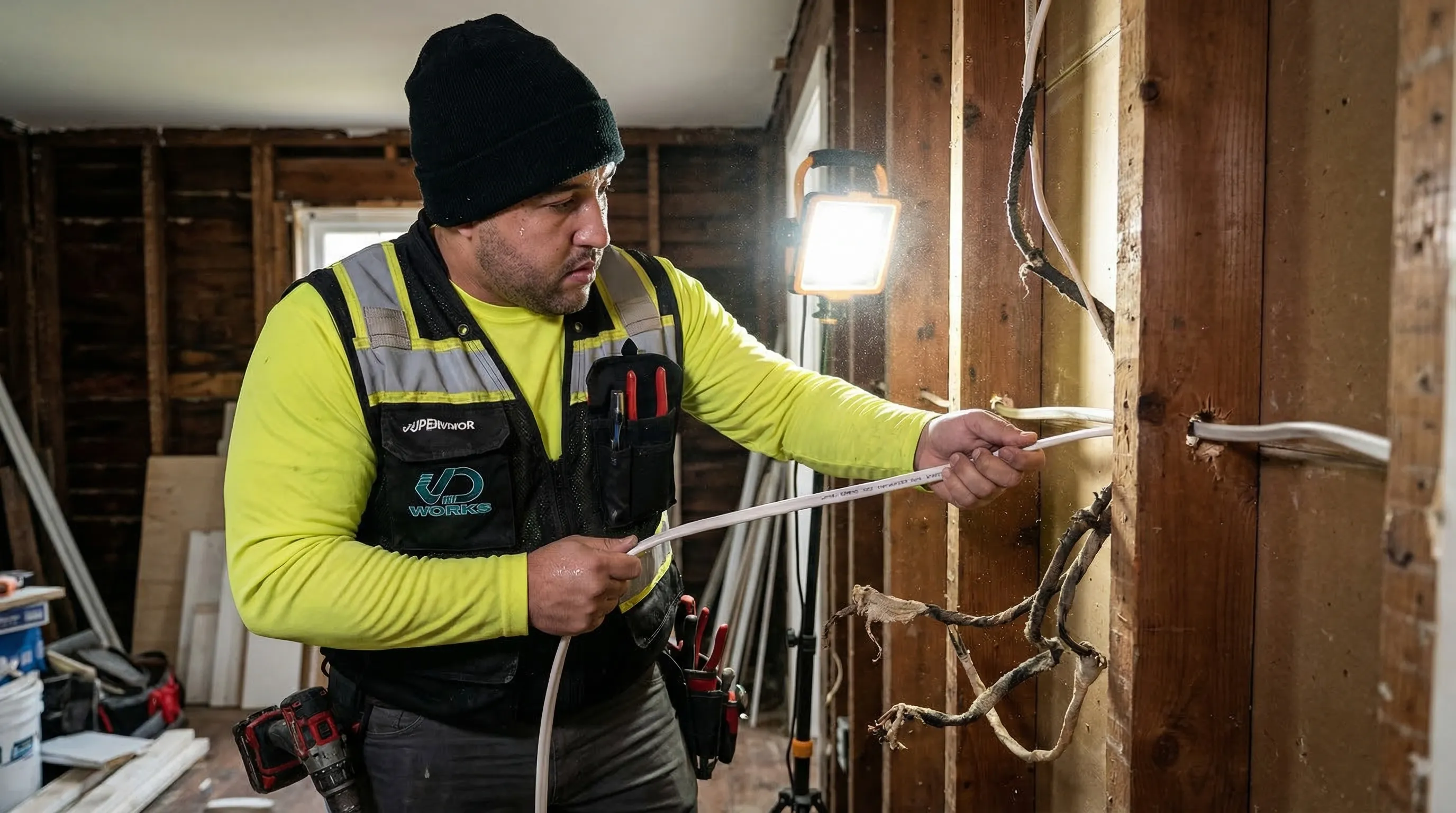
Jordan Jones has rewired homes across metro Atlanta for over 15 years. As a licensed master electrician, he knows how to work through older construction without tearing the place apart. He runs new 12 AWG and 14 AWG copper circuits with AFCI and GFCI protection where code requires it, replaces every outdated connection, and brings the whole system up to current NEC standards. Permitted and inspected. No loose ends.
Warning Signs
If you see any of these, your wiring is trying to tell you something important.
Brown or black marks around an outlet mean heat has been building up behind the wall plate. Warm outlets or switch plates are a sign of loose connections or deteriorated wire insulation. Don't ignore it — this is how electrical fires start.
Getting a tingle or light shock when you plug something in is a grounding problem. Older wiring systems often lack proper ground wires entirely. That means there's no safe path for fault current, and you become it.
If most of your outlets only accept two-prong plugs, your home doesn't have grounded circuits. Adapter plugs and power strips don't fix the underlying problem — the wiring itself needs to be replaced with grounded cable.
Knob-and-tube wiring was common through the 1940s. Cloth-insulated wire carried through the 1960s. If your home is from this era and hasn't been rewired, the insulation is almost certainly degraded. It gets brittle and crumbles when disturbed.
More Georgia insurers are requiring wiring inspections for older homes. Some won't issue policies for homes with knob-and-tube or aluminum wiring. If your insurer is requesting documentation, a rewire might be the only way to keep your coverage.
If you're opening up walls for a kitchen remodel or addition, that's the cheapest time to rewire. The walls are already open, which cuts labor significantly. Don't close them back up with the same 60-year-old wiring inside.
Our Process
Rewiring an occupied home takes planning. Here's how we keep it organized.
Step 01
We inspect your entire system — panel, branch circuits, outlets, switches, and junction boxes. We identify every type of wiring in the house, map out what stays and what goes, and determine the best routing for new circuits.
Step 02
We provide a detailed quote with a room-by-room schedule. You'll know which areas are being worked on each day and when to expect temporary power interruptions. We coordinate with drywall and paint crews if wall openings are needed.
Step 03
We pull new Romex (NM-B) cable through attics, crawlspaces, and wall cavities. Each circuit gets the proper gauge wire, AFCI breakers where required, and GFCI protection in kitchens, bathrooms, and outdoor locations. We work one section at a time to keep the rest of the house powered.
Step 04
The county inspector signs off on the rough-in and the final. We provide a complete circuit directory, photos of the new wiring for your records, and documentation you can send to your insurance company to update your policy.
Common Questions
If your home was built before 1970 and hasn't been rewired, it's likely running on outdated wiring. Knob-and-tube, cloth-insulated, or aluminum wiring all present safety concerns. Frequent breaker trips, discolored outlets, or a burning smell from switches are clear signs the wiring has deteriorated.
Whole-home rewiring in metro Atlanta typically runs $8,000 to $20,000 for a standard 3-bedroom home. Cost depends on square footage, number of circuits, wall accessibility, and whether drywall needs to be opened and patched. We break down every line item in the estimate.
Most rewiring jobs take 5 to 10 working days depending on the size of the home and how accessible the walls and attic are. We work room by room to minimize disruption and coordinate with any drywall or paint crews if wall openings are required.
Usually, yes. We keep power to most of the house while working section by section. Some rooms will be without power temporarily, and there will be dust from any wall openings. It's livable for most people, but some homeowners prefer to stay elsewhere for comfort.
Many Georgia insurers won't cover homes with knob-and-tube wiring, and some charge higher premiums for aluminum branch circuits. If your insurer is flagging your wiring, a rewire is often the only way to maintain coverage or bring your rates down.
More Services
A rewire almost always includes a panel upgrade. Old panels can't support the new circuit count and AFCI breakers modern code requires.
Learn MoreSparking outlet or burning smell? That's an emergency. We're available 24/7 to make old wiring situations safe until a full rewire can be scheduled.
Learn MoreFull rewiring and dedicated equipment circuits for commercial kitchens. Cooking-hood power, equipment lines, and code-compliant installations.
Learn MoreWhat Our Customers Say
"Jordan upgraded our panel from 100 to 200 amps and explained every step of the process. No surprises on the bill, and he cleaned up after himself like he was never here. That's rare."
Marcus T.
Homeowner — Brookhaven, GA