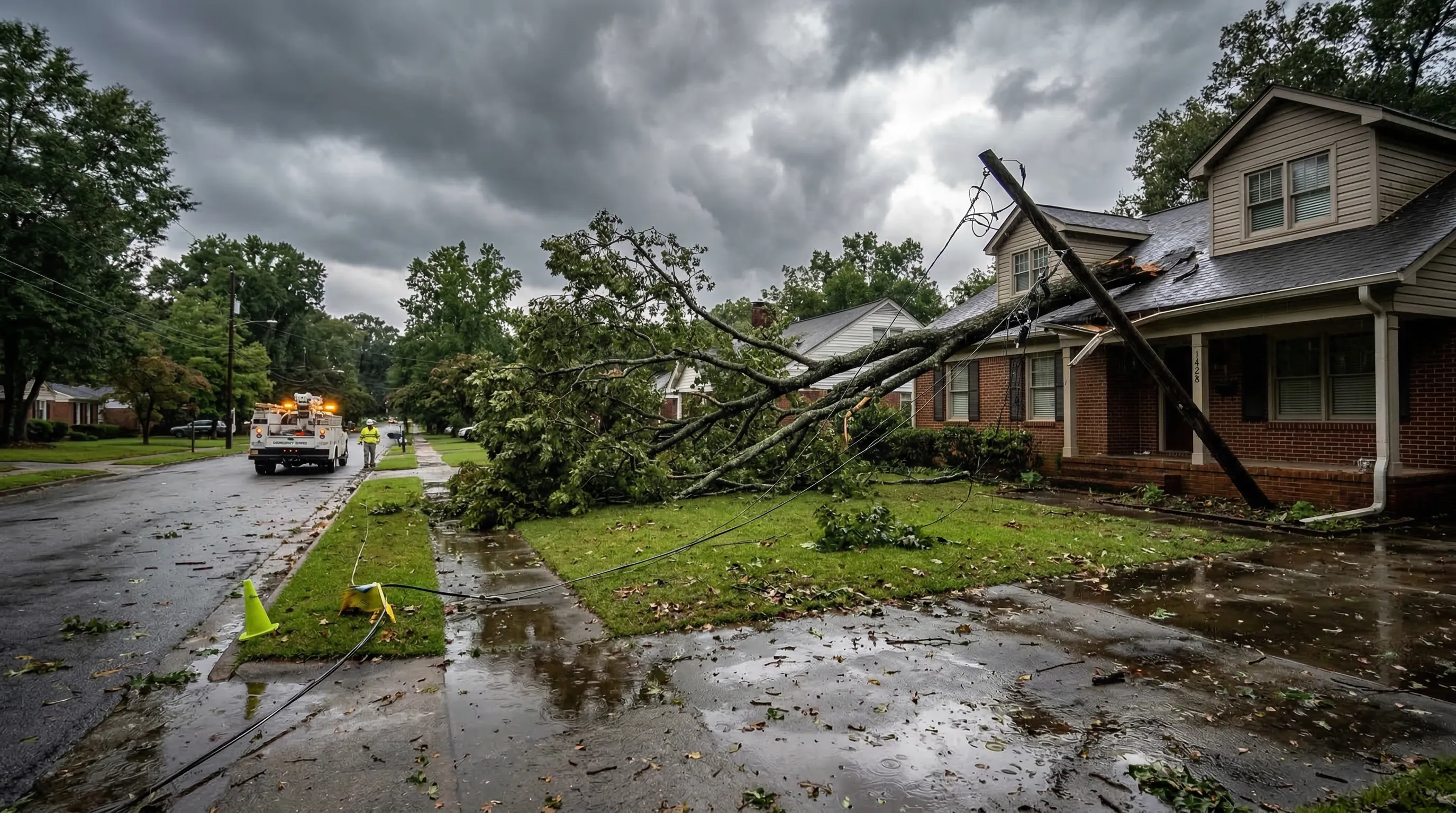
Atlanta averages 50 thunderstorm days per year. Between straight-line winds, lightning, hail, and the occasional tornado, metro Atlanta homeowners deal with storm-related damage more often than most people realize. What many do not consider is what happens to their home's electrical system during and after a severe storm. Downed power lines, lightning surges, flooding, and wind-driven debris can all compromise wiring, panels, and outdoor equipment in ways that are not always obvious the morning after.
This guide covers what you need to know about storm damage electrical safety — what to check, what to avoid, and when you absolutely need a licensed electrician on-site before you flip a single breaker.
How Storms Damage Your Electrical System
A severe storm attacks your home's electrical system from multiple angles. Understanding the types of damage helps you know what to look for after the sky clears.
Lightning Strikes and Surges
A single lightning bolt carries between 100 million and 1 billion volts. Even a nearby strike — not a direct hit — can send a massive surge through the power lines feeding your home. That surge travels through your panel, into your branch circuits, and through every outlet, switch, and connected device. The damage can be immediate (fried electronics, tripped breakers, melted wiring) or delayed. I have seen cases where a summer lightning strike caused wiring insulation to partially melt inside a wall, and the homeowner did not notice a burning smell from an outlet until three months later.
Power strip surge protectors help with minor surges, but they cannot stop a lightning-induced spike. Whole-home surge protection installed at the main panel is the best residential defense. It shunts excess voltage to ground before it reaches your branch circuits.
Wind Damage to Service Equipment
Safety Warning
The weatherhead — the pipe-shaped fitting where the power company's overhead lines connect to your home — is mounted on your exterior wall or roof. High winds can rip it loose, pull the service entrance cable, or snap the mast. When the weatherhead disconnects, exposed live wires may be hanging from your roof. Fallen tree limbs can also damage the meter socket, the mast, or the service entrance conduit. Do not approach or touch any of this equipment after a storm. Call Georgia Power to disconnect service before an electrician makes repairs.
Water and Flooding
Water and electricity are a lethal combination. Even a few inches of water in a basement or crawl space can submerge outlets, junction boxes, and your electrical panel if it is basement-mounted. Floodwater contaminates electrical connections with mud, sediment, and chemicals. Once an electrical component has been submerged, it generally needs to be replaced — cleaning is not enough because corrosion and contamination compromise the connections permanently.
Fallen Trees and Debris
A tree falling on your house can sever the service entrance, crush exterior conduit, or pull the meter off the wall. Inside the house, structural impact can break wire runs, crack junction boxes, and damage the panel. Even if the tree misses the electrical infrastructure, the structural damage may have shifted walls enough to stress wiring inside.
Post-Storm Safety Checklist
After a severe storm passes through your area, work through this checklist before you start plugging things back in or flipping breakers.
Before You Enter the House
- Look for downed power lines. If any lines are down on or near your property, stay at least 35 feet away. Downed lines can be energized even if they are not sparking. Call Georgia Power at 1-888-891-0938 to report them.
- Check the meter and weatherhead. From a safe distance, look at the point where the power lines connect to your house. If the weatherhead is pulled loose, the mast is bent, or wires are hanging, do not enter the house until Georgia Power disconnects your service.
- Look for standing water. If your basement, crawl space, or any ground-level area is flooded, do not walk through it to access the electrical panel. Standing water in contact with any electrical equipment creates an electrocution risk.
Inside the House
- Check the electrical panel. Open the panel door carefully. Look for scorch marks, melted plastic, a burning smell, moisture, or tripped breakers. If the panel shows signs of water exposure or heat damage, leave it alone and call an electrician.
- Do not reset tripped breakers immediately. A tripped breaker after a storm may indicate a short circuit, ground fault, or damaged wiring. Forcing it back on can cause a fire or damage equipment. Let an electrician determine why it tripped before resetting.
- Test outlets and circuits one at a time. Turn breakers on one circuit at a time. If a breaker trips again immediately after resetting, leave it off. Something on that circuit is faulted.
- Check for burning smells. Walk through the house and sniff near outlets, switches, and the panel. A burning plastic or fishy odor means something is overheating. Shut that circuit off and call for emergency electrical repair.
- Inspect major appliances. HVAC systems, water heaters, refrigerators, and washers/dryers can sustain surge damage that is not visible externally. If an appliance behaves erratically after power is restored, unplug it and have it checked.
When to Call an Electrician After a Storm
Not every power flicker requires an electrician. But the following situations absolutely do:
- Any visible damage to your service entrance, meter, or weatherhead. These repairs require coordination with Georgia Power and must be done by a licensed electrician.
- Breakers that will not stay on. A breaker that trips repeatedly indicates a fault on the circuit. It needs professional diagnosis.
- Burning smells, scorch marks, or hot outlets. These are active fire hazards. Do not wait.
- Any flooding that reached electrical equipment. Panels, outlets, and junction boxes exposed to floodwater need professional inspection and likely replacement.
- A lightning strike on or near your property. Even if everything seems to be working, lightning can cause hidden damage to wiring, GFCI outlets, and surge protection that only shows up later.
- Your home lost power but your neighbors did not. If the power outage is isolated to your house, the problem is on your side — not the utility's.
Safety Warning
The most expensive storm repair I have ever done was a home in Decatur where the owner reset every tripped breaker the morning after a severe thunderstorm. One of those circuits had a damaged wire behind the kitchen wall. The breaker held for 36 hours before the wire overheated enough to ignite insulation inside the wall cavity. The kitchen was a total loss. The repair that would have cost $400 turned into $80,000 in fire damage.
Free Download: Seasonal Electrical Maintenance Checklist
Keep your home's electrical system safe year-round with our printable seasonal checklist — built by a master electrician.
Get the Free ChecklistProtecting Your Electrical System Before the Next Storm
Atlanta's storm season runs roughly from March through October, with peak severe weather in April and May. Here is what you can do now to reduce the risk of storm-related electrical damage.
Install Whole-Home Surge Protection
A whole-home surge protector mounts at your main panel and absorbs voltage spikes before they reach your branch circuits. It costs between $300 and $600 installed and protects your entire home. Given that a single surge can destroy $5,000 or more in electronics and appliances, this is one of the best investments an Atlanta homeowner can make.
Upgrade Your Electrical Panel
Modern panels with arc-fault circuit interrupter (AFCI) breakers detect dangerous arcing conditions and shut circuits down before a fire starts. If your panel is 20+ years old or still uses a Federal Pacific or Zinsco brand panel, a panel upgrade dramatically improves your home's storm resilience. Modern 200-amp panels also handle the electrical loads of today's homes far better than the 100-amp panels common in pre-1990 Atlanta construction.
Trim Trees Near Service Lines
Georgia Power trims trees near their high-voltage transmission lines, but the service drop to your house is often your responsibility. Keep branches at least 10 feet from the overhead wires feeding your home. A single falling limb during a storm can rip the service entrance off your house.
Document Your Electrical System
Take photos of your electrical panel (with the cover off — showing the breaker labels), your meter, and your weatherhead. If a storm causes damage, having baseline photos helps your electrician and your insurance company assess what changed.
Insurance and Storm Damage Electrical Claims
Most homeowners insurance policies cover storm damage to your electrical system, including lightning strikes, wind damage, and hail. However, flood damage is typically excluded unless you carry a separate flood policy through the National Flood Insurance Program. Key tips for filing electrical storm damage claims:
- Photograph all visible damage before any repairs are made.
- Keep damaged components — do not throw away a burned outlet, melted breaker, or fried appliance until the adjuster has seen it.
- Get a written diagnosis from your electrician documenting the cause and scope of the damage.
- File the claim promptly. Most Georgia policies require reporting within a reasonable time frame.
Frequently Asked Questions
Warning signs include flickering or dimming lights after power is restored, tripped breakers that will not reset, a burning smell near outlets or the panel, outlets that no longer work, visible damage to your electrical meter or weatherhead, and any appliances that stopped working after the storm. A licensed electrician can perform a full post-storm inspection to identify hidden damage.
If you are under a tornado warning, severe thunderstorm warning with high winds, or if you experience a power outage, turning off your main breaker protects your system from power surges when electricity is restored. You should also turn off the main breaker if you see flooding, smell burning near the panel, or hear unusual buzzing. Read more about power outages vs. electrical emergencies.
Yes. A direct or nearby lightning strike can deliver tens of thousands of volts, which can overwhelm standard power strip surge protectors. Whole-home surge protection installed at the main panel offers significantly better defense, but even it cannot guarantee protection against a direct lightning strike. Post-storm electrical inspections catch hidden damage that surge protectors may have missed.
Storm Hit Your Area? Get a Post-Storm Electrical Inspection.
Hidden storm damage can cause fires weeks or months later. Let a master electrician check your home's wiring, panel, and service entrance.
Request a Storm Damage Inspection