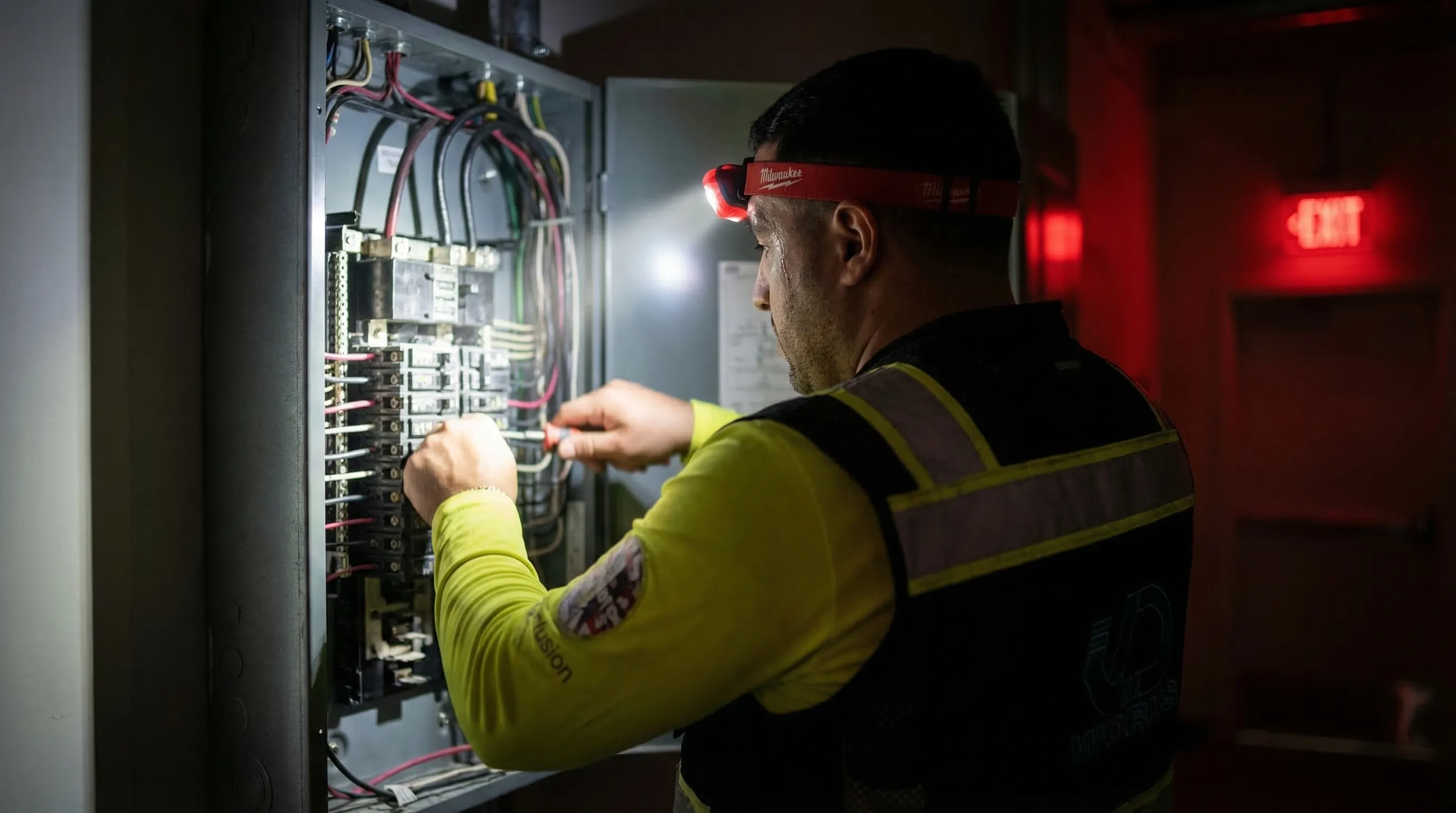
A residential electrical emergency means inconvenience. A commercial electrical emergency means money walking out the door. When the power drops in a restaurant during Friday dinner rush, the register goes dark in a retail store on a Saturday afternoon, or the HVAC dies in a server room on a July afternoon in Atlanta, the clock starts ticking on lost revenue, spoiled inventory, and customer trust. The speed and accuracy of the emergency repair determines whether you lose an hour or a day.
Commercial electrical emergencies are different from residential ones in complexity, urgency, and consequence. This guide covers the most common types of commercial electrical failures, what to do when they happen, and how to set up your business so the next emergency causes the least possible damage.
Common Commercial Electrical Emergencies
Complete Power Loss
Total loss of power to a commercial space can result from a failed main breaker, a blown utility transformer, a damaged service entrance cable, or a utility outage. The first step is determining whether the outage is on your side of the meter or the utility's. Check with neighboring businesses. If they have power and you don't, the problem is in your building's electrical system and you need an electrician. If the whole block is dark, call Georgia Power's outage line.
Single-Phase Loss on Three-Phase Systems
This is one of the most dangerous commercial electrical failures because it's not always obvious. Three-phase motors (HVAC compressors, commercial refrigeration, elevators) that lose one phase will attempt to run on the remaining two phases. This causes rapid overheating and motor burnout, sometimes within minutes. Symptoms include HVAC systems running but not cooling, compressor units making unusual noise, and lights on one-third of the circuits going dim or off while the rest stay on.
If you suspect a single-phase loss, shut down all three-phase equipment immediately and call an electrician. Running motors on two phases destroys them.
Breaker Panel Failure
Safety Warning
Commercial breaker panels can fail due to loose connections that overheat, water intrusion, physical damage, or age. Signs of panel failure include a burning smell near the panel, discoloration or heat marks on the panel cover, a buzzing or crackling sound from inside the enclosure, or a main breaker that trips and won't reset. If you smell burning or see scorch marks, evacuate the area and call 911 followed by your electrician. Do not open the panel cover.
Fire Alarm System Malfunction
A fire alarm system in "trouble" condition (beeping at the panel but not in full alarm) may indicate a ground fault, a broken wire, or a failed device. While not always an immediate life-safety threat, a fire alarm in trouble condition means the system may not respond properly during an actual fire. Most monitoring companies will call you when the panel reports trouble. Get it fixed the same day — fire marshals can cite you for operating with a compromised fire alarm.
The Emergency Response Process
When you call JD Works Electrical for a commercial emergency, here's what happens:
- Phone triage. We ask targeted questions to understand the nature and severity of the emergency. Is there a smell of burning? Is anyone in danger? What equipment is affected? This helps us dispatch with the right tools and parts.
- Rapid response. We target 60-90 minutes on-site for commercial emergencies within our metro Atlanta service area. For life-safety emergencies, we advise calling 911 first.
- Diagnosis. A commercial electrician troubleshoots systematically: check voltage at the service entrance, verify all phases, test breakers, use a thermal camera to identify hot spots, and isolate the fault. Accurate diagnosis is faster than trial-and-error — and prevents creating additional problems.
- Temporary restoration. If the permanent repair requires parts that aren't on the truck or work that takes hours, we implement a temporary solution to get your business operational. This might mean bypassing a failed breaker to a spare slot, running a temporary feeder, or isolating the faulted circuit and restoring power to everything else.
- Permanent repair. Once the emergency is stabilized, we schedule the permanent repair at a time that minimizes further disruption to your operations.
What to Do Before the Electrician Arrives
- Don't repeatedly reset tripping breakers. One reset attempt is reasonable. If it trips again immediately, leave it off. Forcing a breaker closed on a faulted circuit can cause an arc flash — a violent explosion of heat and light that can cause severe burns and fires.
- Evacuate if you smell burning or see smoke. Electrical fires can develop behind walls where you can't see them. A burning smell from a panel or outlet is not a "wait and see" situation.
- Document everything. Note the time of the failure, what equipment was running, what symptoms you observe, and which breakers are tripped. This information speeds the electrician's diagnosis.
- Protect perishable inventory. If the emergency involves refrigeration loss, keep cooler and freezer doors closed. A sealed commercial walk-in holds temperature for 4-6 hours. Opening the door to check repeatedly accelerates temperature rise.
Free Download: Seasonal Electrical Maintenance Checklist
Keep your home's electrical system safe year-round with our printable seasonal checklist — built by a master electrician.
Get the Free ChecklistPreventing Commercial Electrical Emergencies
Most commercial electrical emergencies are preventable. The failures we see most often trace back to deferred maintenance — loose connections that have been overheating for months, breakers that haven't been exercised in years, overloaded circuits that were never designed for the current load.
A structured maintenance program catches these problems early. Read our complete guide to commercial electrical services for preventive maintenance recommendations, and our code compliance guide for inspection requirements that keep your building safe.
Safety Warning
The fastest way to fix a commercial electrical emergency is to prevent it. Annual thermographic scanning and breaker testing catch 90% of the failures that turn into midnight phone calls.
Frequently Asked Questions
Any electrical failure that threatens safety or shuts down business operations: complete power loss, burning smell from panels or equipment, sparking or arcing from electrical components, tripped main breaker that won't reset, loss of a single phase on three-phase equipment, fire alarm system malfunction, and emergency lighting failure in an occupied building.
Response time depends on the electrician and your location within metro Atlanta. JD Works Electrical targets a 60-90 minute response for commercial emergencies within our service area. For life-safety emergencies — fire, active arcing, energized equipment in a flood — call 911 first, then call your electrician.
You can try resetting a commercial breaker once. If it trips again immediately, do not continue resetting it. Repeated reset attempts on a faulted circuit can cause the breaker to fail catastrophically, create an arc flash, or start a fire. Turn the breaker to the full OFF position and call a licensed electrician to diagnose the fault.
Commercial Electrical Emergency? Call Now.
JD Works Electrical provides emergency commercial electrical repair across metro Atlanta. Fast response, accurate diagnosis, minimal downtime.
Contact Us for Emergency Service