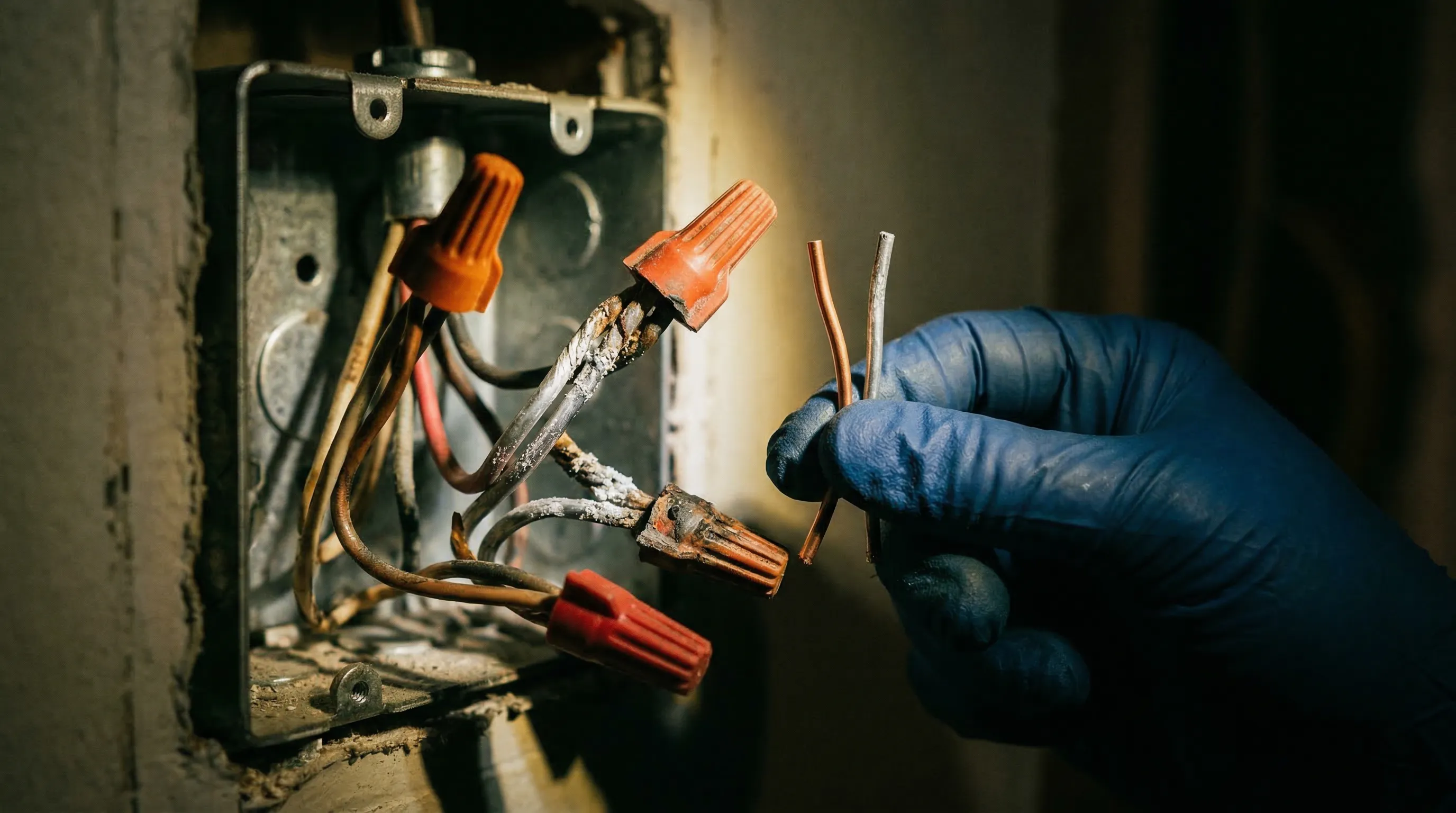
Between about 1965 and 1975, builders across the United States — including metro Atlanta — used aluminum instead of copper for residential branch circuit wiring. A copper shortage and rising prices made aluminum an attractive alternative. An estimated 2 million homes were wired with aluminum during this period, and the Consumer Product Safety Commission (CPSC) later found that homes with aluminum wiring are 55 times more likely to have fire-hazard conditions at electrical connections than homes wired with copper.
If your Atlanta home was built in that era — and many homes in Cobb, Gwinnett, DeKalb, and south Fulton County were — understanding aluminum wiring risks and your remediation options is important. The wiring itself is not the problem. The problem is what happens at the connection points over time.
Why Aluminum Wiring Fails
Aluminum is a perfectly functional electrical conductor. Your utility service entrance cable — the heavy wire running from the meter to the panel — is almost certainly aluminum, and that is fine because it uses properly rated connections designed for aluminum. The problem arises specifically with 15-amp and 20-amp branch circuit wiring (the wiring that feeds your outlets, switches, and light fixtures) when it connects to devices rated only for copper.
Thermal Expansion
Aluminum expands and contracts with heat about 30% more than copper. Every time a circuit is loaded (an appliance turns on) and then unloaded (the appliance turns off), the wire heats up, expands, cools down, and contracts. Over thousands of cycles, this loosens the screw terminals and push-in connections at outlets and switches. A loose connection generates heat. Heat accelerates the loosening. The cycle feeds itself.
Oxidation
When aluminum is exposed to air, it forms aluminum oxide on the surface. Aluminum oxide is a poor electrical conductor, unlike copper oxide which still conducts reasonably well. The oxide layer increases resistance at connection points, which generates more heat. In a tight connection, the oxide is crushed during installation and the problem is minimal. In a loose connection, oxidation compounds the already-elevated resistance.
Galvanic Corrosion
When aluminum wire connects directly to a copper terminal (such as the brass screws on a standard outlet), a galvanic reaction occurs in the presence of moisture. The dissimilar metals corrode at the contact point, further degrading the connection. This is why devices marked "CO/ALR" (copper/aluminum rated) or "AL-CU" use materials that minimize galvanic corrosion.
Creep
Under sustained pressure, aluminum deforms slowly — a property called "creep." A screw terminal tightened to proper torque on aluminum wire will gradually loosen as the aluminum creeps out from under the screw. Copper does not exhibit meaningful creep under the same conditions. This is why aluminum connections need periodic re-torquing — or, better, a permanent remediation method that accounts for creep.
Pro Tip
If your home was built between 1965 and 1975 in metro Atlanta, check your panel for silver-colored wires on the branch circuit breakers. That is the fastest way to confirm aluminum wiring. The large service entrance cables are often aluminum regardless — it is the small 14- and 12-gauge branch wires that matter.
How to Identify Aluminum Wiring in Your Home
Three ways to check:
- Look at the panel. Open the dead front cover on your electrical panel (with the main breaker on — the exposed bus bars are behind a separate cover). The branch circuit wires landing on the breakers will be either copper (orange-brown) or aluminum (dull silver). Note: the large service entrance cables are often aluminum regardless — that is normal. Check the small 14-gauge and 12-gauge branch circuit wires.
- Check the cable markings. Pull an outlet off the wall (with the breaker off) and look at the cable entering the box. Aluminum NM cable is printed with "AL" or "ALUMINUM" on the sheath. Copper cable is marked "CU" or "COPPER."
- Look at the wire color. Aluminum wire is silver. Copper wire is orange-brown. If the wire has oxidized, aluminum appears dull gray while copper turns green or dark brown.
If you are not comfortable checking this yourself, any licensed electrician can identify aluminum wiring in a few minutes during an inspection. If your home was built between 1965 and 1975 in metro Atlanta, the probability is high. Check our article on signs your home needs rewiring for additional warning signs.
Approved Remediation Methods
The CPSC recognizes two primary methods for making aluminum wiring connections safe. A third option — full rewiring — eliminates the problem entirely.
1. COPALUM Crimp Connectors
The COPALUM method uses a specially designed crimp connector and a powered crimping tool to permanently join a short copper pigtail to the existing aluminum wire. The crimp creates a cold weld — a solid metal-to-metal bond that does not loosen over time. The copper pigtail then connects to the outlet, switch, or fixture normally.
COPALUM is the CPSC's recommended repair method. The crimp tool is proprietary (made by AMP/Tyco), and only electricians trained and certified to use it should perform the work. The connection is permanent, does not require re-torquing, and has the strongest safety record of any aluminum wiring remediation method.
Cost: approximately $50 to $80 per connection point, including labor.
2. AlumiConn Connectors
AlumiConn connectors are an alternative approved by the CPSC for aluminum-to-copper connections. They use a set-screw lug design with separate ports for the aluminum and copper wires, keeping the two metals physically separated. The connector is filled with an anti-oxidant compound that prevents corrosion.
AlumiConn connectors can be installed by any licensed electrician — no proprietary tool is required. They are a good option when COPALUM-certified electricians are not available in the area. The connection is reliable, but it is a mechanical connection rather than a permanent crimp, so it is slightly less robust than COPALUM over very long time horizons.
Cost: approximately $40 to $65 per connection point.
3. Full Copper Rewiring
The definitive solution is removing the aluminum branch circuit wiring entirely and replacing it with copper NM-B cable. This eliminates every aluminum connection in the home and brings the wiring up to current code standards, including grounding, GFCI protection, and circuit sizing.
Full rewiring is more expensive — $8,000 to $20,000 for a typical Atlanta home — but it addresses every concern at once, including the panel upgrade that aluminum-wired homes usually need as well. For homeowners planning to stay in the home long-term or preparing it for sale, full rewiring provides the highest return on investment.
Free Download: Seasonal Electrical Maintenance Checklist
Keep your home's electrical system safe year-round with our printable seasonal checklist — built by a master electrician.
Get the Free ChecklistWhat NOT to Do
Several commonly attempted fixes are not approved and can make the problem worse:
- Wire nuts alone: Standard wire nuts are not approved for aluminum-to-copper connections. The dissimilar metals corrode inside the wire nut, and the connection loosens over time. Purple wire nuts (Ideal brand "Twister AL/CU") are sometimes marketed for this purpose but are not recognized by the CPSC as an acceptable permanent repair.
- Replacing outlets with "CO/ALR" devices: While CO/ALR-rated outlets are designed for aluminum connections, simply swapping outlets does not address the decades of loosened connections, oxidation, and creep already present at every connection point in the home. CO/ALR outlets are better than standard outlets for aluminum, but they are not a remediation method on their own.
- Ignoring it: Aluminum wiring problems are progressive. Connections that are slightly loose today will be dangerously loose in five years. The most common time for an aluminum wiring fire is not during the first decade — it is after 30 or 40 years of cumulative degradation.
Safety Warning
Aluminum wiring is not inherently dangerous — aluminum carries electricity as well as copper does. The danger is in the connections, where two different metals meet under conditions that slowly degrade over decades. Fix the connections, and the wiring is safe.
Insurance and Resale Impact
Many Georgia insurance carriers treat aluminum wiring the same way they treat knob and tube wiring — with higher premiums, additional requirements, or outright declination. Having a licensed electrician perform a full COPALUM or AlumiConn remediation and provide a certificate of completion can satisfy most insurance underwriters.
For resale, aluminum wiring is a red flag on every home inspection report. Buyers in Atlanta's competitive market have options, and a home with unremediated aluminum wiring gives them a reason to negotiate hard or walk. Remediation before listing eliminates the issue and protects your asking price.
At JD Works Electrical, we perform aluminum wiring inspections and COPALUM/AlumiConn remediation across metro Atlanta. We also provide documentation that satisfies insurance and real estate requirements. View our rewiring services or contact us for a free inspection.
Frequently Asked Questions
Check the wiring visible at your electrical panel or by removing an outlet cover (with the breaker off). Aluminum wire has a dull silver color compared to copper's orange-brown. Cable sheaths are stamped "AL" or "ALUMINUM." If your home was built between 1965 and 1975, there is a significant chance it has aluminum branch circuit wiring.
Aluminum wiring that has not caused visible problems may still have deteriorating connections behind outlets and switches. The connections loosen gradually, and the failure can be sudden when it occurs. A professional inspection of the connection points is the only way to know the actual condition. Many electricians recommend remediation even without symptoms because the risk increases with time.
COPALUM crimp remediation costs roughly $50 to $80 per connection point. A typical Atlanta home has 40 to 80 connection points, so whole-home remediation runs $2,000 to $6,400. AlumiConn remediation costs $40 to $65 per connection. Full copper rewiring costs $8,000 to $20,000 depending on size and complexity. Contact us for a specific estimate.
Not Sure About Your Wiring?
JD Works Electrical inspects and remediates aluminum wiring in homes across metro Atlanta. We use CPSC-approved methods and provide documentation for insurance and real estate purposes.
Schedule an Aluminum Wiring Inspection