Atlanta Electrical Services
Your microwave shouldn't kill the lights every time it runs. If you're tripping breakers, dimming lights, or stacking power strips to keep up, your home doesn't have enough dedicated circuits. That's not a minor annoyance — it's a wiring problem that gets worse over time and can damage expensive appliances.
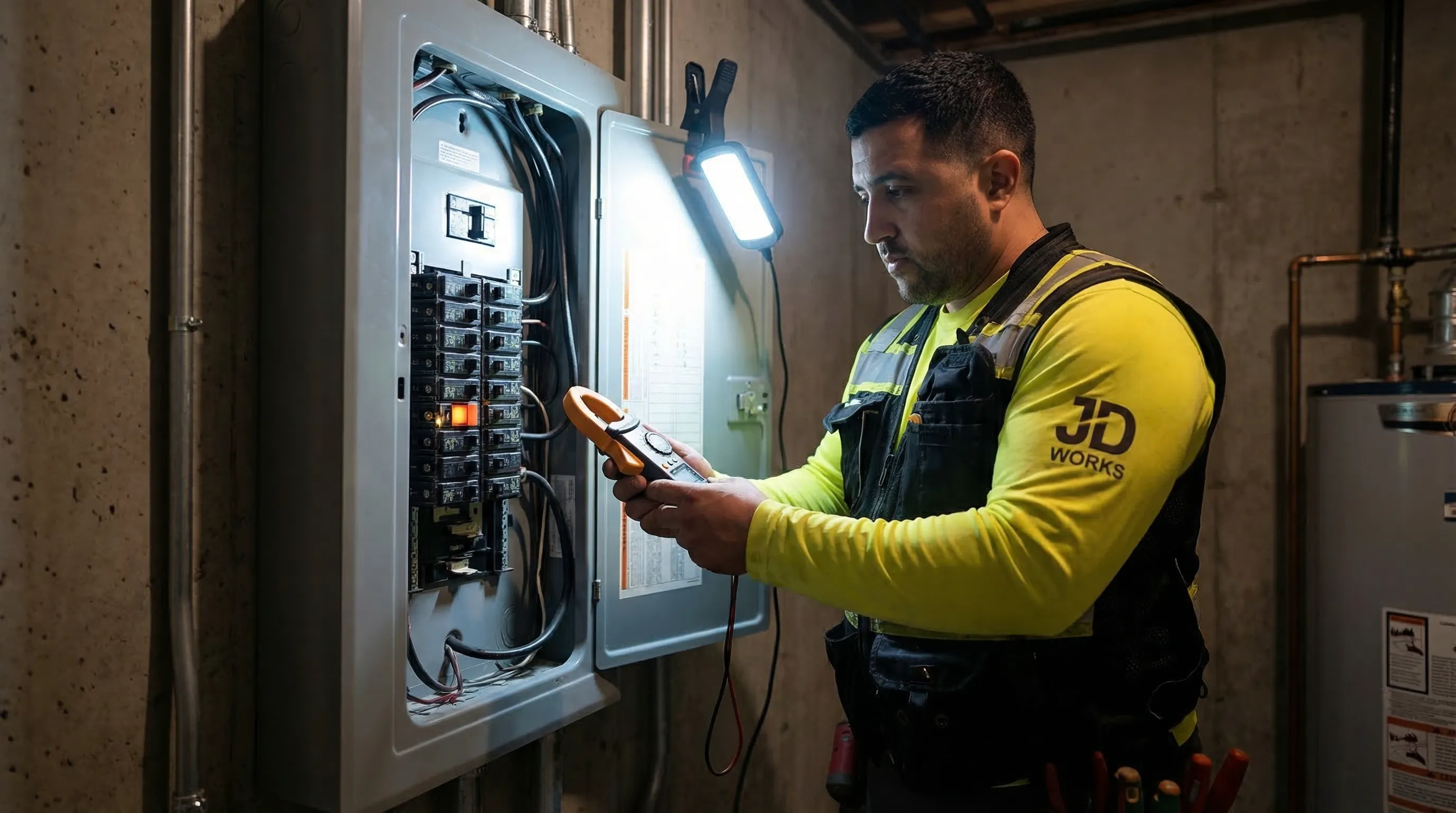
I'm Jordan Jones, master electrician and owner of JD Works Electrical. I've been wiring homes across Metro Atlanta for over 15 years. Dedicated circuit installation is one of my most common calls because most homes built before 2000 weren't wired for today's load. Between kitchen appliances, HVAC systems, home offices, and power tools, the average household pulls way more power than it used to. A dedicated circuit gives each high-draw appliance its own protected line back to your panel — no sharing, no overloading, no tripped breakers.
We're licensed and insured in the state of Georgia. Every circuit we install meets current NEC requirements and local Atlanta building codes. We use the correct wire gauge for each amperage rating — 12 AWG for 20-amp circuits, 10 AWG for 30-amp, 6 AWG for 50-amp — and we label everything clearly in your panel so the next person who opens it knows exactly what's going on.
Warning Signs
When a circuit breaker keeps tripping, it's doing its job — cutting power before the wire overheats. But it means that circuit is carrying more than its rated 15 or 20 amps. A dedicated line takes the heavy appliance off the shared circuit and gives it room to run.
When your AC kicks on and the kitchen lights dip, that's voltage drop from too many devices sharing one circuit. The compressor pulls a surge on startup and starves everything else on the line. A dedicated 30-amp or 40-amp circuit for the HVAC fixes it.
If an outlet cover feels warm to the touch or you catch a faint burning smell near a receptacle, the wiring behind it is working too hard. That's heat from resistance, and it's a fire hazard. Don't wait on this one — call us immediately.
Adding a new electric range, tankless water heater, or workshop compressor? Most major appliances require a dedicated circuit by code. Same goes for kitchen remodels, garage conversions, and home office builds. We wire the circuit before the appliance goes in.
Stacking power strips and extension cords is a band-aid, not a solution. It doesn't increase circuit capacity — it just hides the problem behind more plugs. If you're running a daisy chain of strips in your office or workshop, you need more circuits, not more outlets.
Our Process
Step 01
We check your electrical panel's capacity, count existing circuits, and calculate the amperage draw of each appliance that needs a dedicated line. If your panel is full, we'll discuss options — subpanel or upgrade.
Step 02
We plan the wire route from panel to appliance location — through the attic, crawlspace, or walls. You get a clear quote with the circuit amperage, wire gauge, and any panel modifications spelled out.
Step 03
We pull the new wire, install the correct breaker, mount the receptacle or hardwire the appliance, and test everything under load. Each circuit gets labeled in your panel, and we clean up before we leave.
Common Questions
Any appliance that draws a significant load needs its own circuit. That includes refrigerators, electric ranges, ovens, dishwashers, microwaves, washers, dryers, water heaters, HVAC systems, garbage disposals, and sump pumps. The NEC also requires dedicated circuits for bathroom and kitchen countertop receptacles. If an appliance has its own motor or heating element, it probably needs a dedicated line.
Most dedicated circuit installations in the Atlanta area run between $200 and $500 per circuit. The final price depends on circuit amperage (20-amp vs. 30-amp vs. 50-amp), wire run distance from your panel, whether we need to add a new breaker slot, and how accessible your walls and attic are. We provide a firm quote after the on-site assessment — no surprise charges.
Watch for breakers that trip repeatedly, flickering lights when appliances kick on, buzzing sounds from outlets or your panel, warm or discolored outlet covers, and a burning smell near receptacles or switches. Any of these mean a circuit is carrying more load than it's rated for. That's a fire hazard, and you should call an electrician right away.
There's no single number — it depends on your home's square footage, appliance load, and lifestyle. A typical 2,000-square-foot Atlanta home might have 20 to 30 circuits. The NEC requires dedicated circuits for kitchens, bathrooms, laundry, HVAC, and major appliances. Older homes often have too few circuits for modern power demands, which is exactly why dedicated circuit installation is one of our most common calls.
A 20-amp circuit uses 12-gauge wire and handles up to 2,400 watts on a 120V line. It's the standard for kitchen countertop outlets, bathroom receptacles, home offices, and most small appliances. A 30-amp circuit uses 10-gauge wire and handles up to 7,200 watts on a 240V line. You'll see 30-amp circuits for electric dryers and some water heaters. Larger appliances like ranges and EV chargers typically need a 40-amp or 50-amp circuit with even heavier wiring.
Related Services
A full safety audit of your home's wiring, panel, and circuits. We check for overloaded circuits, outdated wiring, and code violations — the perfect first step before adding dedicated lines.
Learn MoreSmart switches, thermostats, and automation systems need proper wiring — including neutral wires and dedicated circuits for hubs. We wire your home so everything talks to each other.
Learn MoreEgress lighting, dedicated circuits for fire alarm and sprinkler systems, emergency lighting, and inspection-ready installations for restaurants, retail, and warehouses.
Learn MoreWhat Our Customers Say
"We needed a Level 2 charger installed and two other companies quoted us way more and couldn't get to us for weeks. Jordan came out in two days, ran a dedicated circuit from the panel, and had us charging that evening."
Priya S.
Homeowner — Sandy Springs, GA